Best Microsoft Lens Alternatives After Its Retirement

Summary :
Microsoft Lens will be fully removed from both the Apple App Store and Google Play by the end of this year, now we need to move on to replacement apps.
Table of Contents
Microsoft is Killing off Lens
Originally launched in 2015 as “Office Lens,” the Microsoft Lens app became widely appreciated for its simplicity, reliability, and no-pay approach to digitizing paper documents, notes, whiteboards, receipts, and business cards. Unfortunately, Microsoft will officially start phasing out the Lens app on iOS and Android, starting September 2025.
From that point onward, the app will no longer be available for new installs in App Stores, and users will no longer be able to create new scans within Lens, although previously saved scans remain accessible as long as the app stays installed. This is obviously Microsoft’s move to force Microsoft Lens users to their consolidated Microsoft 365 Copilot app.
The Next Scanning Solution
Now, Microsoft is replacing it with the Microsoft 365 Copilot app — a bulkier, AI-integrated app that, while with scanner features, changes the lightweight workflow many Lens users loved.
There are plenty of scanning apps out there with different features, pricing, and ease of use. After testing and comparing them, we found PDFgear Scan is the best option. We also listed other solid alternatives, including Microsoft’s own Copilot app, so you can see why PDFgear Scan stands out and how to get the most from it.
Comparing Lens, PDFgear Scan, 365 Copilot
For a quick glance, here’s a feature comparison table that lists Microsoft Lens, PDFgear Scan, and Microsoft 365 Copilot App side-by-side, showing exactly what’s matched or missing.
| Feature | PDFgear Scan | Microsoft 365 Copilot | Microsoft Lens |
| Document Scanning Quality | High | High | High |
| Multi-Page Scanning | |||
| OCR (Searchable Text) | |||
| Export to PDF | |||
| Export to Image | (Multiple/Long) | ||
| Export to Word, PowerPoint | |||
| AI Summarization, Assistance | (FREE) | (Paid) | |
| ID Card, Book, QR Code Scan | |||
| Direct Save to OneNote | |||
| Business Card Scan and Contact Save | |||
| Cloud Integration | Optional | Optional | |
| Ad-Free Experience | |||
| Cost | Free | Subscription for AI Features | Free |
Now let’s dive into the details.
PDFgear Scan
As a trusted brand in the PDF industry, PDFgear also offers a free but pro-level scanner app on iOS and Android: PDFgear Scan. It matches Microsoft Lens’s scanning speed and accuracy while improving on certain aspects. It offers a comprehensive suite of features that overlap significantly with Microsoft Lens, making it the best alternative for users seeking an efficient document scanning solution.
See what PDFgear Scan perfectly replicates or even outperforms Microsoft Lens:
- Automatic edge detection, page cropping, messy background removal, and perspective correction.
- Versatile scan modes include Document, Receipt, ID Card, Book, QR Code Extract, and Scan to Word for all-around scanning purposes.
- Export your scans to PDF, Microsoft Word, multiple images, or a long image.
- The AI chat feature to quickly extract information from the paper document.
- Create signatures to sign on the documents right after scanning.
- Multi-page scanning is seamless, with the option to reorder or edit pages before saving.
- Editing options to add images/documents to the scan, apply filters, or crop/rotate the scan.


First of all, the scanning camera launches quickly, and you’ll love how it automatically detects edges, crops perfectly, and removes messy backgrounds—no manual tweaking needed. PDFgear’s Extract Feature lets you extract text from paper documents, handwriting, and images using OCR. The OCR is every bit as sharp as Lens—text recognition is clean and accurate.
PDFgear offers a variety of scanning modes. While working, they will also adjust image processing, like cropping, glare removal, and contrast enhancement, to best suit the specific content. Scanning multiple pages was simple, and the “Book Mode” flattened curved pages perfectly when you scanned textbooks.
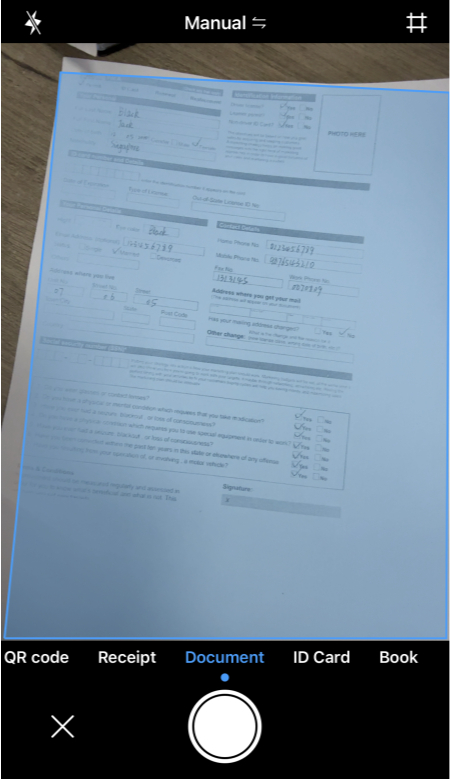
PDFgear Scan Edge Detection
The app offers dedicated modes for receipts, IDs, contracts, and barcodes. When you scan a receipt, the app will automatically analyze the receipt and create a tidy expense report, which can then be exported to Excel/PDF/CSV/Receipt Photo. You can also filter for Have Tax/No Tax, or sort by Create Date or Receipt Date—such a huge time-saver.
There are many other unique features. For example, it also provides a free and powerful AI chat feature (which is a paid feature in the Copilot 365 app) for you to extract key information from lengthy documents with a simple question.
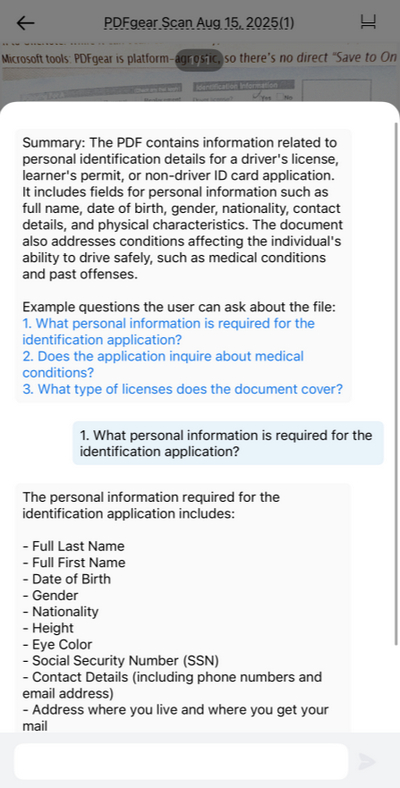
Free AI Chat
It allows you to instantly create signatures from drawing/typing/images and sign on the PDF, without needing an additional PDF editor app. This is rather practical when you’re working with paper contracts and paper forms.
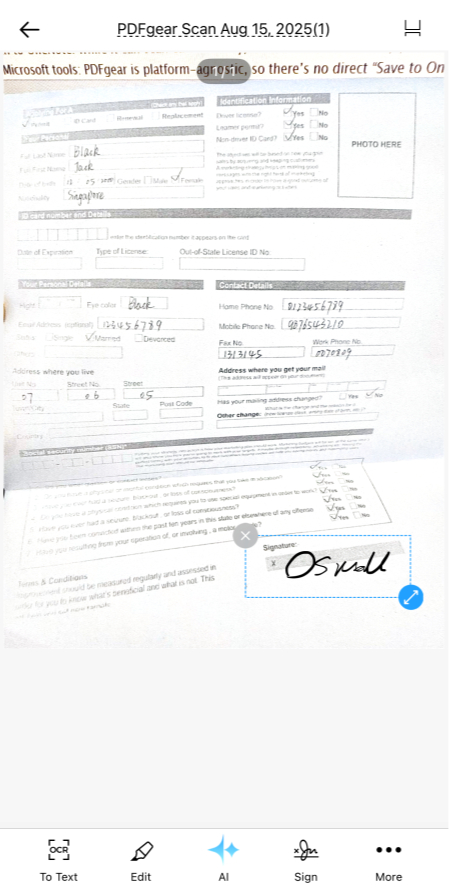
Sign the Scan
For users who loved Lens’s quick, accurate, and versatile scanning without bloat, PDFgear Scan is the closest you’ll get — plus a few modern upgrades. Best of all, PDFgear Scan is free to use with no ads or limits.
The only thing that PDFgear does not replicate from Lens is that it’s not in Microsoft’s ecosystem, so there’s no direct “Save to OneNote” button.
Microsoft 365 Copilot App
As the official recommendation, Microsoft suggests we start using Microsoft 365 Copilot for ongoing scanning needs. Now is a part of the features in the Microsoft 365 Copilot App, the scanning camera can be accessed from the hamburger menu > Create > Scan.
In short, using the Microsoft 365 Copilot app as a Lens replacement feels quite familiar in terms of scan quality and workflow, but not so much in scanning input/output options. Its Create section has almost the same user interface as the Lens app, the camera features (rotate, retake, reset) and the review & edit features (crop, ink, text, etc.) are exactly the same, but the exporting options have been trimmed down.
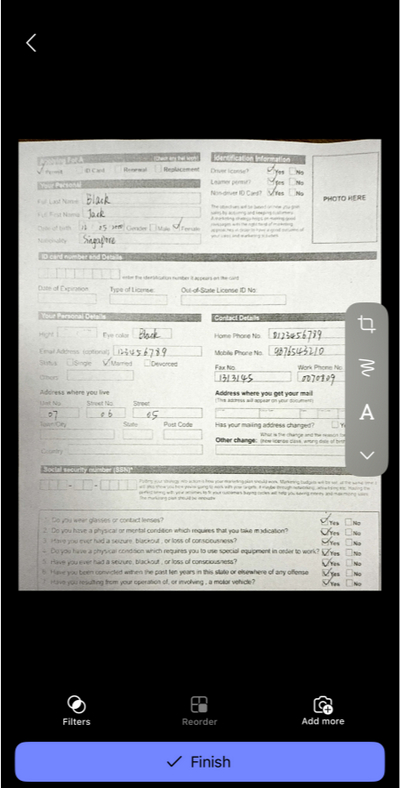
Copilot 365 Scan
There are many Lens features that Microsoft 365 Copilot won’t cover:
- Direct save/export to OneNote, Word, or PowerPoint
- Versatile scanning modes, including Actions, Document, Whiteboard, Business card, and photo.
- Read Aloud / Immersive Reader-type accessibility features
- Lightweight, reliable scanning without bloated AI extras
- Read Aloud / Immersive Reader-type accessibility features
- Lightweight scanning workflow – Copilot’s UI is busier, taking more taps for a quick capture.
As stated, Microsoft 365 Copilot App only provides one scanning mode, unlike the multiple ones on Microsoft Lens. The original Actions mode that can be used to extract text from paper documents and photos has been moved to the Extract Text feature in the Microsoft 365 Copilot app. Moreover, while the sharing and exporting options are fewer than before, you get to choose a desired page size (Original, Medium, Small) when exporting the scans.
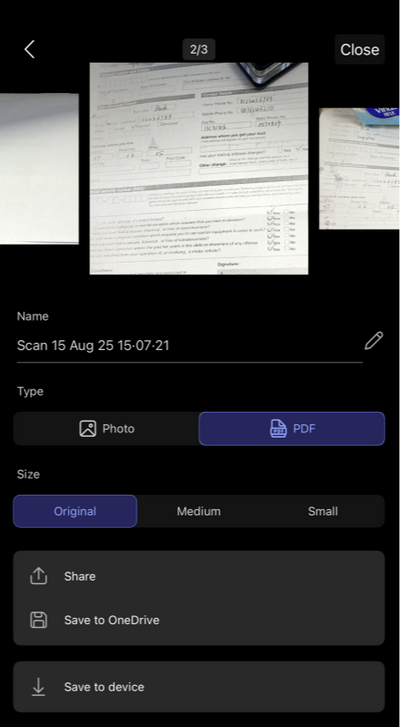
Copilot App Export
Microsoft 365 Copilot App offers high-quality document scanning with sharp OCR — just like Lens. It can handle multi-page documents smoothly, keeps text recognition clean, and integrates naturally into Microsoft’s cloud ecosystem via OneDrive.
Where it diverges is mainly in how the output is handled, unlike PDFgear Scan and Lens, which allow you to output to Word and PowerPoint, Microsoft 365 Copilot only supports PDF and Image formats. It also adds AI-powered summarization and content suggestions, something Lens never had.
Copilot also offers AI-driven summarization and content suggestions for scanned documents, which can be genuinely useful if you’re processing long reports or contracts. The app’s interface is modern but slightly busier than Lens; it’s clearly designed as a hub for all Microsoft 365 work rather than a dedicated scanner. On the downside, we miss the old “quick snap and save to OneNote” convenience, and there are not as many scan modes now. Still, if you’re already in Microsoft’s ecosystem and don’t mind adapting, it’s a capable, high-quality scanner with bonus AI perks—just expect to rewire your habits a little.
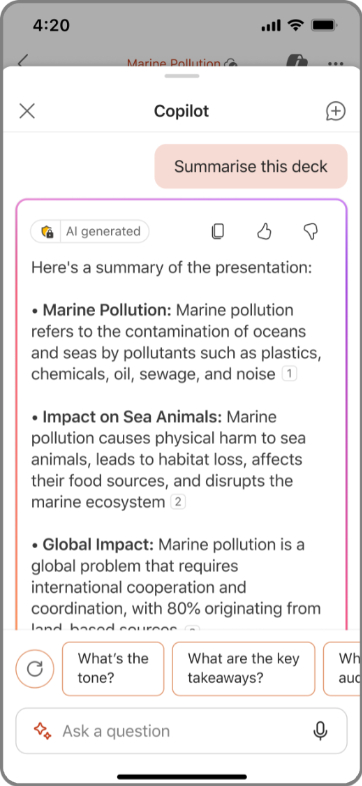
Copilot 365 Chat
The lack of various scan modes is also quite a shame. For example, without the Whiteboard capture mode, now you can’t scan handwritten notes and sketches with enhanced visibility of the ink strokes like in Lens.
Some More Alternatives
Still have trouble finding your best replacement? Here are some more options.
Apple Notes Document Scanner (iOS, iPadOS)
Hidden in plain sight, Apple Notes’ scanner auto-detects pages, crops, and runs OCR, making scans clear and searchable. Multi-page support and iCloud sync mean I can scan on iPhone and view on Mac or iPad instantly. Scans live inside notes for adding comments, links, or checklists. Lacks batch edits, but speed and ecosystem integration make it ideal for everyday use.
Google Drive Scanner (Android, limited iOS via web)
Open Drive → Plus → Scan, and you’re done—fast edge detection, solid OCR, and instant PDF save to Drive. Minimal editing tools, no batch scans, and cloud-only storage, but it’s clutter-free and fits seamlessly into the Google ecosystem.
OneDrive Scanner (iOS, Android)
From the home screen, tap the camera, scan, and save—clear quality with automatic OCR. Instantly backed up to the cloud with basic crop/rotate tools. No local save or extras like business card parsing, but perfect for secure, reliable cloud storage.
OneNote Scanner (iOS, Android)
Drop scans right into your notes alongside typed text. Strong detection, business card scanning that auto-saves contacts, and instant sync across devices. Basic filters only, and scanning is a bit buried in the UI, but great for note-focused workflows.
Samsung Notes/Samsung Scan (Samsung Android)
Camera detects documents on the fly; “Tap to Scan” captures in seconds. Samsung Notes adds annotation tools with S Pen and easy PDF export. Excellent quality and OneDrive sharing, but lacks built-in OCR. Feels more like a natural part of the phone than a separate tool.
Final Take
As Microsoft Lens phases out, finding a reliable, efficient, and feature-rich scanning app is more important than ever.
Microsoft Lens was a rare example of a perfect balance between simplicity and capability. Microsoft 365 Copilot App inherits its scanning core but shifts toward AI and cloud integration, which works best for heavy Microsoft 365 users.
PDFgear Scan, on the other hand, delivers the speed, accuracy, and local control that Lens fans valued most — with extra flexibility, zero cost/ads, and no subscription. If you want to keep scanning the way you always have, without getting pulled into a heavier workflow, PDFgear Scan is the smarter move.
More Related Articles
